


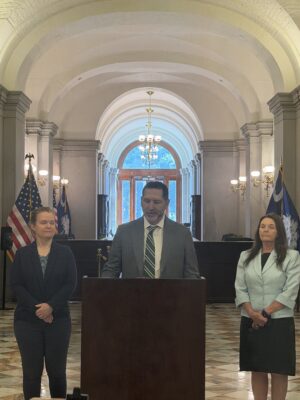
On September 22, the South Carolina section of the American Society of Civil Engineers unveiled the 2026 Report Card for South Carolina’s Infrastructure at the State House in Columbia. It assigned the state’s infrastructure an overall grade of ‘C-’. The grade represents an improvement from the 2021 Report Card grade of ‘D+’, signaling progress in several key sectors thanks to sustained investment and a renewed focus on transportation infrastructure.
Developed by the report team, the assessment evaluates the condition and performance of eight categories of infrastructure that South Carolinians rely on every day. While recent investments have led to measurable gains in areas such as roads, ports, aviation, and dams, the report also highlights growing concerns about aging bridges, drinking water systems, and long-term infrastructure resilience.
2026 South Carolina Infrastructure Grades
| Grade | Category |
| B+ | Ports |
| C- | Aviation, Bridges |
| D+ | Dams, Roads, Transit |
| D | Drinking Water, Wastewater |
Investment Is Driving Progress
The report finds that record levels of federal funding and state investment are beginning to pay dividends. South Carolina’s transportation infrastructure, in particular, has benefited from major investments designed to accommodate rapid population growth and increasing economic activity.
“South Carolina has responded to changing infrastructure needs, and recent investment is helping improve systems that have seen decades of underinvestment,” said Renee Gardner, PE, co-chair of the 2026 Report Card. “While there are signs of progress, the progress is fragile as funding programs expire, and infrastructure operators face workforce shortages. Addressing these challenges to infrastructure improvement will benefit all South Carolinians for decades to come.”
Roads Show Improvement
One of the most encouraging developments in the report is the improvement in South Carolina’s road network. Roads earned a D+, up from a D in 2021. Over the past decade, the percentage of major roads rated in good condition has more than doubled, increasing from 19% in 2016 to 41% today.
Despite this progress, significant challenges remain. Nearly half of major roads, 43%, are still rated in poor condition, underscoring the need for continued investment and maintenance.
Aging Bridges Raise Concerns
While roads improved, bridges moved in the opposite direction. The bridge grade declined from a C to a C- as the state’s bridge inventory continues to age. Only 34.5% of bridges are currently rated in good condition, compared to the national average of 44%. Meanwhile, the percentage of bridges in poor condition has increased from 5.5% to 7.7%.
The report also notes that more than 3,000 South Carolina bridges are now over 60 years old and approaching or exceeding their original design life, making rehabilitation and replacement increasingly urgent.
Ports Continue to Lead the Way
South Carolina’s ports remain one of the state’s strongest infrastructure assets, earning the highest grade in the report at B+, an improvement from their previous B grade.
More than $2 billion has been invested in port improvements over the past decade, including projects that support larger cargo vessels and strengthen connections to rail and highway networks. The completed Charleston Harbor deepening project now allows the Port of Charleston to accommodate the world’s largest container ships without tidal restrictions, contributing to significant growth in cargo volumes.
Water Systems Face Growing Pressures
The report identifies drinking water and wastewater infrastructure as areas requiring immediate attention. Drinking water dropped from a D+ to a D, driven by aging pipelines, increasing violations, and concerns about system resilience. Wastewater maintained a D grade but faces similar challenges.
Population growth and more frequent severe storms have placed increasing stress on water infrastructure statewide. The report also points to workforce shortages as experienced operators retire and too few new workers enter the field.
Seven Steps to Raise the Grade
The report card outlines seven recommendations to improve South Carolina’s infrastructure performance in the years ahead:
- Sustain and expand state infrastructure investment.
- Prioritize drinking water and wastewater infrastructure as public health imperatives.
- Establish a comprehensive dam safety funding program.
- Address bridge deterioration before it accelerates.
- Expand public transit options to meet growing demand.
- Invest in development of the future infrastructure workforce.
- Incorporate resilience planning into all infrastructure decision-making.
Looking Ahead
South Carolina’s improved overall grade demonstrates that strategic investment can produce measurable results. However, the report makes clear that continued commitment is necessary to maintain that momentum. As the state grows and faces increasingly severe weather events, infrastructure systems must be modernized, maintained, and strengthened to meet future demands.
We’d like to thank the ASCE members who worked on this report card that will serve as a valuable advocacy tool for years to come.