


Virginia’s 2026 Infrastructure Report Card Released
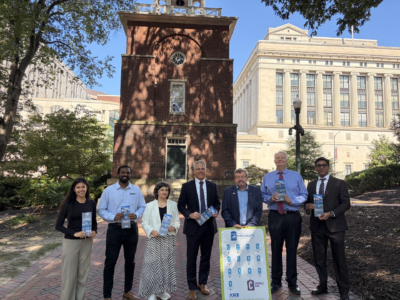 On August 25th, ASCE’s Virginia section released the 2026 Report Card for Virginia’s Infrastructure outside of the historic Bell Tower at the Virginia Capitol Complex in Richmond. Virginia’s overall ‘C’ grade is unchanged from the last report card in 2022 and matches the national infrastructure grade.
The event brought together leaders from ASCE, state agencies, and local government. Report card co-chairs John Harman and Vic Crawford unveiled the report card findings; ASCE CEO Peter O’Neil discussed how important the report card is for ASCE. Guest speakers included Kayla Bravo from the Virginia Department of Housing and Community Development, Dwayne Roadcap from the Virginia Department of Health, and Richmond Chief Administrative Officer Odie Donald II.
Infrastructure Category Grades
| Grade | Categories |
| B+ | Bridges, Broadband |
| B | Solid Waste |
| C+ | Drinking Water, Rail |
| C | Public Parks, Roads, Stormwater |
| C- | Dams, Transit |
| D+ | Schools, Wastewater |
| D | Energy |
Bright Spots and Ongoing Challenges
Several infrastructure categories saw positive momentum. Bridges and broadband each earned a B+, the highest grades in the report card. Virginia’s bridges are in better condition than the national average, while broadband expansion has connected more than 90% of the state to high-speed internet. Solid waste earned a B, reflecting strong performance and reliable investment.
Drinking water and rail received C+ grades, while roads, public parks, and stormwater earned C grades. Roads improved from a C- in 2022 thanks to continued investment, although traffic congestion remains a challenge. Virginia’s water systems generally perform well, but many pipes and facilities are aging and will need upgrades in the years ahead.
Dams and transit earned C- grades, while schools and wastewater received D+ grades, showing the impact of aging infrastructure and growing costs. The lowest grade was energy, which earned a D, largely because electricity demand is rising rapidly, driven in part by data center growth, while new generating capacity is struggling to keep pace.
Recommendations to Raise Virginia’s Grade
The report card includes several recommendations to raise the grade. They area
- Investment: Increased investment is needed to meet growing demands driven by population growth and more intense storm events. Targeted funding will help ensure infrastructure can continue to operate safely and reliably under increasing stress.
- Resilience: Recent storms have demonstrated Virginia’s resilience while highlighting the need for the state to prepare for future events, including updating emergency action plans for all departments and municipalities.
- Safety: Strengthening dam inspection programs and adopting comprehensive roadway safety strategies will be essential to reducing risks and improving public safety statewide.
- Capacity: Added capacity for aging water-related infrastructure is critical, especially as population growth continues. Many systems are past their design life cycle and need upgrades, which will help to address water quality, flooding, and erosion concerns.
- Technology: Relying on improving technologies such as green infrastructure and artificial intelligence (AI) will help to stretch limited funding and ensure investments are made efficiently.
What Comes Next for Virginia Infrastructure
While the report card provides a snapshot of Virginia’s infrastructure today, its real purpose is to help shape the future. ASCE members in Virginia are already working on plans to meet with lawmakers when the Virginia General Assembly returns to session early next year and are excited to have a new report card to share with Virginia’s congressional delegation when they attend ASCE’s Legislative Fly-In next spring.