


ASCE Resilience Forum Elevates Solutions for Infrastructure that Lasts
On September 24, during NYC Climate Week, ASCE convened public officials, engineers, infrastructure owners, technology leaders, and researchers for the 2026 Infrastructure Resilience Forum in New York City. In partnership with Bentley Systems and Siemens and hosted by WSP, the event centered on the newly released Built to Endure guide and explored how communities can move from resilience planning to implementation through stronger policy, better coordination, modern technology, and community engagement.
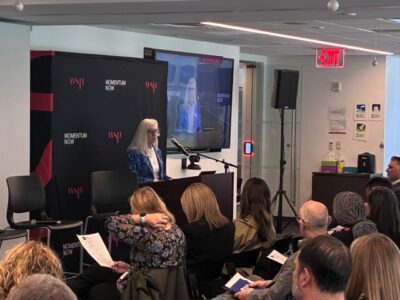
A recurring theme throughout the day was that resilience is no longer about protecting individual assets. It is about strengthening interconnected systems and ensuring infrastructure can withstand increasingly frequent and severe disruptions while continuing to serve communities.
Building Resilient Communities
ASCE President Marsha Anderson Bomar opened the forum by emphasizing that while America’s infrastructure earned its highest-ever Report Card grade of a C, investment alone is insufficient without resilience. She highlighted the importance of risk-informed decision making, stronger design standards, better asset management practices, and long-term planning that accounts for future conditions.
Keynote Address: State and Local Actions are Driving Change
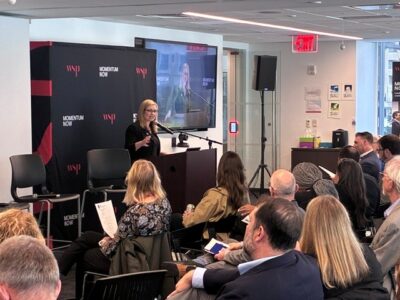
Mayor Kate Gallego of Phoenix discussed how one of the nation’s fastest-growing cities is addressing the interconnected challenges of extreme heat, water security, mobility, and economic growth. Key examples of major investments were shared including advanced water purification, conservation programs that have helped stabilize water use despite population growth, urban heat mitigation strategies, and voter-approved transportation funding initiatives. Mayor Gallego also emphasized the importance of leveraging federal programs such as PROTECT grants and pointed to the city’s efforts to support emerging industries, including semiconductor manufacturing, while building more resilient infrastructure systems.
In recorded remarks, North Carolina Governor Josh Stein discussed the state’s ongoing recovery from Hurricane Helene and lessons learned from widespread damage to transportation, water, and communication networks. Response is taking shape through dam safety, flood monitoring, landslide mapping, water infrastructure restoration, and the statewide Flood Resilience Blueprint. Governor Stein emphasized how resilience requires proactive planning, science-based decision-making, and sustained investment before disasters occur.
Marie Therese Dominguez, Commissioner of the New York State Department of Transportation, detailed how resilience has become integrated into transportation planning and project delivery across New York. Major initiatives highlighted include the Hudson Line resiliency program, Livingston Avenue Bridge replacement, flood mitigation initiatives, and I-81 Community Grid project in Syracuse. Commissioner Dominguez proposed that transportation investments should be viewed as community resilience investments, delivering benefits that extend beyond mobility to improve safety, reliability, and economic vitality.
Across the keynote addresses, a consistent message : resilience is not done as a single act; rather it is a long-term commitment through coordinated investments, forward-looking policies, and collaboration across all levels of government.
Fireside Chat: Leadership and Strategy
Chris Bradshaw of Bentley Systems and Sofia Berger of WSP discussed how many communities, particularly small and medium-sized municipalities, feel “priced out” of resilience.
Several practical examples of resilience implementation were presented, including:
Kentucky Bridge Assessment
Through the use of drones, LiDAR, and digital modeling, Kentucky reduced bridge survey times from months to days, cut costs by millions, and created digital inventories expediting recovery after severe flooding damaged dozens of bridges.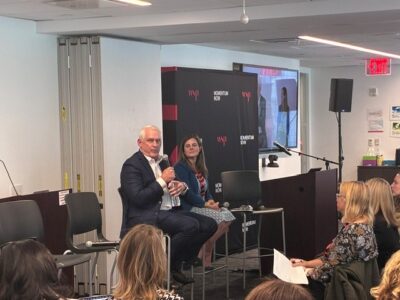
United Kingdom Utility Collaboration
In the UK, a power utility partnered with gas and telecommunications providers to showcase interdependencies between their systems. Through joint investments of approximately £1 million, a savings was secured estimated at £17 million avoiding future recovery costs.
Wellington, New Zealand Digital Twin
Wellington created a digital twin to visualize future risks from sea-level rise, landslides, and earthquakes for improved public awareness and support for resilience investments.
Discussion repeatedly pointed to the need to prioritize systems rather than assets and promoting technology, data integration, and stakeholder collaboration to support decision-making.
Better Planning, Stronger Infrastructure
Panelists engaged on actions in planning to further infrastructure resilience; speakers featured for the session – Jennifer Perkins (Siemens), Roni Deitz (Arcadis), Alexis Taylor (New York City Economic Development Commission), and Melissa Targett (Port Authority of New York and New Jersey).
Key takeaways –
- Bringing engineers, planners, designers, contractors, economists, and funding experts together at project inception.
- Planning with future funding and implementation pathways in mind.
- Managing infrastructure as interconnected systems, not isolated assets.
- Prioritizing transparency with residents and demonstrating return on investment.
Examples –
- Wilmington, Delaware’s resilient planning efforts supported through targeted federal grants.
- Boston’s Climate Ready South Boston initiative.
- New York City waterfront resiliency and Financial District adaptation projects.
Adapting Policy to Mitigate Risk
This session moderated by Jennifer Goupil (ASCE) brought speakers together to discuss policies impacting resilient infrastructure with institutionalizing resilience rather than treating it as secondary or optional.
Shared examples included:
Salt Lake City Public Utilities
Using the Envision certification, Salt Lake City’s Holly Lopez shared how the utility is revamping water and wastewater facilities while attaching sustainability and resilience metrics. In turn, the process has led to the adoption of a citywide sustainable infrastructure policy requiring third-party verification for major projects.
New York City
Carrie Grassi (WSP) discussed efforts to integrate climate resilience design guidelines into capital projects, helping agencies account for future climate conditions from project conception through design and implementation.
Data, Technology, and AI
Doug Priest (Microsoft) shared how successful resilience policies depend on trusted, shared data and transparent decision-making. Tools referenced include digital twins, geospatial tools, scenario modeling, and AI-enabled analysis with adapting governance, traceability, and human oversight.
Building Community for Proven Results
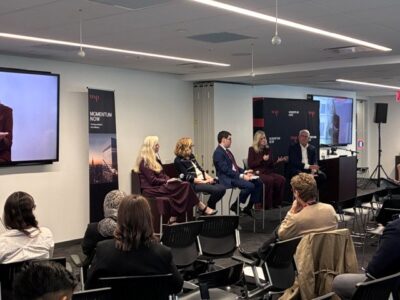 The final panel discussion centered on community engagement with a focus on North Carolina’s resilience work. Featured speakers were Mayor Janet Cowell (City of Raleigh), Jonathan Moch (NC Governor’s Office), Elizabeth Losos (Duke University), and Pat Cummens (ESRI). Panelists pointed to success in resilience when community members participate directly in decision-making.
Initiatives spotlighted in the session included –
- North Carolina’s Flood Resilience Blueprint, which provides local governments with mapping, planning, modeling, and decision-support tools.
- Raleigh’s flood warning systems, floodplain mapping, emergency communications programs, and rain garden initiatives.
- Regional collaboration among municipalities, academia, and industry to meet flooding challenges.
- Heightened use of digital twins, ESRI StoryMaps, and interactive visual tools to help residents understand risks and solutions.
Further, speakers noted that effective resilience planning must recognize historical inequities and ensure communities most affected by flooding and climate hazards have a voice in project development.
Outlook on Resilience
Jonah Garnick (WSP), Tyler Oathes (Rutgers University), and Sara Oliver (Duke University) closed out the forum with a discussion on driving resilience in career and project development. Key takeaways include –
- Go deeper into project analysis and implementation.
- Demonstrate return on resilience investment.
- Foster collaboration across disciplines.
- Bring younger professionals into decision-making processes.
- Continue sharing resilience success stories that resonate with the public.
The event concluded with the signing of a memorandum of understanding between ASCE and the International Coalition for Sustainable Infrastructure (ICSI), underscoring the forum’s key theme: building resilient infrastructure requires strong partnerships, shared knowledge, and a long-term commitment to strengthening communities.
A special thank you to Bentley Systems, Siemens, and WSP for their tremendous support of this event!