


Kentucky’s infrastructure earned an overall C- grade in the newly released 2026 Report Card for Kentucky’s Infrastructure, released by the Kentucky Section of the American Society of Civil Engineers (ASCE). That grade is unchanged from Kentucky’s last report card which was released in 2019.
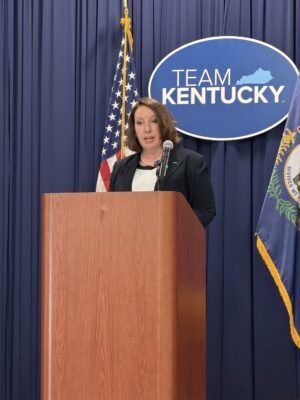
The report card was unveiled at Capitol Education Center in Frankfort, and featured remarks from ASCE Kentucky Section President Sam Guy, and the report card was revealed by Colette Easter, the chair of the report card committee.
The event also featured remarks from Russ Romine, Executive Director of the Kentucky Engineering Center, and Susan Lancho, Senior Manager of Government & External Affairs for Kentucky American Water. Both speakers emphasized the critical role infrastructure plays in supporting Kentucky’s economy, public health, safety, and quality of life, particularly as communities face increasing pressures from extreme weather events and aging systems. They also talked about the importance of developing and growing the infrastructure workforce who will design, build, maintain, and operate the next generation of Kentucky’s infrastructure.
2026 Kentucky Infrastructure Grades
| Grade | Infrastructure Category |
| B- | Energy, Solid Waste |
| C+ | Aviation, Drinking Water |
| C | Bridges |
| C- | Roads |
| D+ | Dams, Levees, Wastewater |
| D | Hazardous Waste |
| D- | Stormwater |
Transportation Grades Show Improvement
While Kentucky’s overall grade remained unchanged from 2019, the report highlights notable progress in transportation infrastructure. Roads improved from a D+ to a C-, and bridges advanced from a C- to a C. Engineers attributed these gains to sustained investment, preventative maintenance efforts, technological improvements, and federal funding support, including projects funded through the Infrastructure Investment and Jobs Act.
Stormwater Grade Near Failing
However, the report also identifies several areas requiring urgent attention. Kentucky’s stormwater infrastructure received a D-, the lowest grade in the report and the first-ever assessment of Kentucky’s stormwater. The report notes that increasingly frequent flooding and heavy rainfall events are putting additional strain on systems designed to manage stormwater runoff. Wastewater, dams, and levees each earned D+ grades, reflecting concerns about aging infrastructure, funding gaps, and long-term maintenance needs.

Solutions for Kentucky’s Infrastructure
Kentucky’s engineers also warned that rising construction costs, workforce shortages, and growing infrastructure demands are creating challenges across nearly every sector. Although federal investments have helped advance critical projects, significant needs remain to ensure infrastructure systems can support long-term economic growth and withstand future weather-related stresses.
The report card includes several recommendations to improve the grade. They are:
- Establish sustainable, long-term infrastructure funding: Increase and stabilize state and local investment, maximize available federal funding, and pursue innovative financing and partnerships to address aging infrastructure, maintenance backlogs, and growing capital needs.
- Prioritize asset management and preventive maintenance: Expand condition assessments, life-cycle planning, data-driven decision-making, and preventive maintenance to extend asset life, identify critical needs, reduce emergency repairs, and make the most effective use of limited resources.
- Build resilience into infrastructure planning and investment: Incorporate hazard mitigation, risk assessment, updated design standards, redundancy, and emergency preparedness into infrastructure decisions to reduce vulnerabilities to flooding, severe storms, and other extreme weather events and improve recovery.
- Strengthen Kentucky’s infrastructure workforce: Expand partnerships with universities, technical schools, training programs, and industry to recruit, train, and retain the engineers, operators, technicians, and skilled tradespeople needed to design, operate, and maintain infrastructure.
- Plan proactively for growth and changing infrastructure demands: Strengthen coordination among state and local governments, utilities, infrastructure owners, and regional partners to prepare for population and economic growth, changing land use, emerging technologies, and increasing demands on energy, water, and transportation systems.
- Balance infrastructure investment with affordability: Develop sustainable funding and rate structures that reflect the cost of providing reliable infrastructure while leveraging assistance programs, regionalization, federal funding, and other strategies to limit burdens on households and communities.
Helping Advocate for Infrastructure
Beyond assigning grades, the report card is also a valuable ASCE advocacy tool to inform decision makers and the public about the condition of the state’s infrastructure. ASCE members in Kentucky have a new resource to show local, state, and federal lawmakers the benefits of infrastructure investment that has already occurred in the state, and how that investment pays dividends. We’d like to thank every ASCE member who worked on the 2026 Report Card for Kentucky’s Infrastructure. The time and energy they spent volunteering on this project is crucial to ASCE’s advocacy efforts.