


By: Sarah Simons, Senior Technical Writer, CDM Smith
Water security is emerging as one of this century’s defining challenges. Drought, industrial demands, climate variability, aging infrastructure, and emerging contaminants are just a few of the pressures straining freshwater resources. Expanding supply alone is no longer sufficient. Future water security depends on making systems smarter, more efficient, and more resilient.
Artificial intelligence (AI) is proving to be a vital catalyst for this transition, yet AI remains a tool, and people are the core of our industry. Investing in talent and cultivating leadership are essential to using the full potential of AI innovations in water systems.
Optimizing Water Reuse with AI Technology

Water reuse has evolved from a sustainability initiative into a critical strategy for long-term water security. This includes meeting the escalating non-potable water demands of AI-supporting data center infrastructure.
Because reuse systems generate large volumes of operational data – like flow rates, water chemistry, weather, and equipment performance – AI is well suited to support improvements to efficiency and reliability.
One application is predictive water quality management. This approach uses machine learning to detect early trends before operational parameters deviate from specified regulatory or operational thresholds. Predictive maintenance and digital twins also help forecast equipment failures, simulate scenarios, and strengthen resilience. Furthermore, AI can help teams optimize treatment by adjusting chemical dosing, lowering energy use, and boosting performance across advanced treatment systems.
Using AI to Break the Desalination Cost Curve
Desalination is widely recognized as a strategic solution to water scarcity, especially in coastal regions. Yet despite decades of technological progress, many projects are hit with rising capital costs and constant pressure to cut energy use.
Recent cost increases challenge the assumption that efficiency gains alone will make desalination affordable.
AI is increasingly helping address these challenges. In reverse osmosis – the dominant desalination technology – AI analyzes feedwater conditions, pressure, recovery rates, and energy prices in real time. This reduces electricity consumption while maintaining steady freshwater output.
AI can also improve membrane management by predicting fouling from biological growth, scaling, and suspended solids. This visibility enables proactive cleaning before performance drops. In pretreatment, AI helps plants quickly respond to changing seawater conditions, including turbidity spikes and algal blooms.
Digital twins further support performance by simulating operational changes and disruptions. AI is also enabling better integration with renewable energy, lowering costs and reducing environmental impact.
PFAS Treatment: Using AI for Smarter Decisions
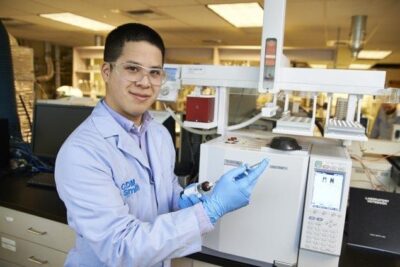
PFAS are among today’s most complex water challenges. Unlike conventional contaminants, PFAS include thousands of compounds with different chemical behaviors, treatment responses, and evolving regulatory requirements.
AI supports utilities and engineers to manage this complexity more effectively.
AI can help experts optimize treatment selection by analyzing PFAS composition, water chemistry, flow rates, and treatment goals. It uses these data points to predict performance across technologies such as granular activated carbon, ion exchange, reverse osmosis, and emerging destruction methods. It also improves adsorption system management by predicting media breakthroughs, helping utilities reduce unnecessary replacement costs while protecting water quality.
Monitoring and compliance offer another excellent use case. PFAS testing can be expensive, but with AI, experts can combine laboratory data with online monitoring and historical trends to estimate risk between sampling events and identify unusual conditions earlier.
Building Smarter Water Systems
Water security will not come from a single technology. It requires better data, stronger decisions, and operational excellence.
AI helps drive that future by improving desalination economics, increasing confidence in water reuse, and advancing PFAS treatment.
Human expertise, however, remains indispensable. Technology can enhance decisions and strengthen operations, but it cannot replace the judgment, experience, and accountability of water professionals.
The future of water depends on skilled people using AI as a powerful partner to build safer, more reliable, and more sustainable water systems for generations to come.
—
To learn how CDM Smith is advancing water security in practice, connect with our water reuse, desalination, and PFAS specialists to explore the technologies, services, and expertise shaping the next generation of resilient water systems.
CDM Smith Water Reuse and Desalination Services