




On May 6, 2026, public, engineering, and industry leaders met to identify and advance solutions at the forefront of infrastructure innovation. ASCE’s Innovation Forum, hosted by the Reservoir Center for Water Solutions, brought together various stakeholders to share perspective and response on the latest challenges and opportunities shaping project and program delivery in the built environment. Select panels focused on key recommendations from the 2025 Report Card for America’s Infrastructure across workforce, water, transportation, and disaster response. Following a short welcome by Josh Mahan, Xylem’s Director of Government and Industry Relations, ASCE’s president Marsha Anderson Bomar gave opening remarks describing how innovation has driven infrastructure planning and implementation, and the prospects ahead in this space.

Leadership, Technology, and Transformation

Building Tomorrow’s Infrastructure Workforce
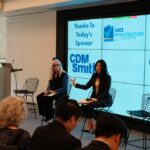
Moderated by Jennifer Todd (A Greener Tomorrow), the workforce session centered policy and processes which lead to improved outcomes for workers in meeting the job demands of today and in the future. Panelists Tom Smith (US Army Corps of Engineers), Dana Westgren (VirginiaWorks), and Martha Ross (Brookings) discussed how workers are being trained, obstacles to ensure education meets expected skills and responsibilities, and the landscape of programs aligned with industry and employer demands. While historic investment has been directed by the federal government into infrastructure investment, panelists concurred a huge opportunity was missed in matching job training the expansion of project development created by renewed resources. General agreement was signaled as well by speakers to enhance coordination among employers and job training providers at the local, regional, and state levels to ensure training meets employer needs.
Spotlight on Local Project Delivery
John Thomas, Chief Performance Officer for the DC Department of Transportation, shared insight on technology and policy updates transforming the District’s transportation network. The department has incorporated several key processes and tools proving better efficiencies and outcomes; these include permitting reforms with utilities and asset management using drones, lidar, and mapping technologies. Presentation slides are available here.
Solutions in Water Quality and Efficiency

Innovation in Disaster Preparedness and Recovery
Moderator Mark Pestrella (LA County Public Works) led the session on improved tools and approaches on disaster response. Joined by panelists Stan Gimont (Hagerty Consulting), Sara McTarnaghan (Urban Institute), and Derrick Hiebert (AECOM), the conversation provided key insight for jurisdictions to adequately address mitigation and recovery needs. Discussion also noted the immense challenges involved in acquiring and deploying limited resources to rebuild following major disaster events. LA’s palisades fire was a central part of the session with Los Angeles County taking the lead among several communities to restore property and infrastructure.
Learn More
The Innovation Forum is the second of three events providing more in-depth exploration of recommendations in the 2025 Report Card for America’s Infrastructure.
The next forum is scheduled this September on Resilience.