


The American Society of Civil Engineers (ASCE) North Carolina Section has released its 2026 Report Card for North Carolina’s Infrastructure, assessing seven infrastructure areas: aviation, bridges, dams, drinking water, roads, stormwater and wastewater. North Carolina’s infrastructure earned an overall grade of C-, a mediocre rating which indicates a need for improvement over areas such as funding, operations and maintenance and capacity.
North Carolina is a thriving state, with an expanding economy largely because of population growth. With that population growth comes the challenges of the state’s infrastructure to meet increased demands. These challenges are exacerbated by extreme weather and recently, storms such as Tropical Storm Helene, have highlighted the need for increased funding, capacity and resiliency of the state’s infrastructure. While the response from multiple state agencies and dozens of municipalities showed North Carolina’s durability, the storm also illustrates the need for greater commitment from the state to support our interconnected infrastructure systems. With thousands of bridges, roads, stormwater culverts, drinking water and wastewater pipes from the coast to the mountains being impacted by this historic event, North Carolina needs to be prepared for similar disasters moving forward. In addition to recovery from Tropical Storm Helene and preparing for the next big storm, improving the state’s infrastructure will enhance quality of life across the state.
The Infrastructure Investment and Jobs Act (IIJA) has played a critical role in closing longstanding funding gaps across North Carolina’s infrastructure systems – providing $12.3 billion in funding to projects statewide. State transportation funding grew from $150 million in FY2015 to $482 million in FY2025, allowing agencies to better manage the state’s diverse terrain, from the mountainous west and the Piedmont to the coastal region. The geographic differences create unique operational and maintenance challenges; one such example is the necessary replacement of a frequently washed-out section of NC-12 near Cape Hatteras with a 2.4-mile, $145 million bridge. Other significant needs remain across additional sectors as well. The state faces a $5.97 billion dam repair backlog, including $2.83 billion for high-hazard dams. Further, EPA’s 2022 Clean Watersheds Needs Survey identified $12.6 billion in sewer and wastewater treatment needs. Water quality is further shaped by aging drinking water, stormwater, and wastewater systems, many of which rely on locally generated stormwater utility fees. Population growth is also straining airport capacity as enplanements surge, with the IIJA providing $520 million to support needed aviation upgrades. Additional state funding sources have proven to be effective such the North Carolina Department of Environmental Quality (NCDEQ) which has funded $1.5 billion for drinking water since 2014. These funding sources have helped to maintain the current capacity and condition, but additional funding is needed to accommodate population growth and maintain a state of good repair.
Further funding and financing opportunities will have both immediate and long-term benefits. Additional resources will aid infrastructure improvements with critical funding shortfalls, in turn supporting quality of life and help meet the demands of recent population growth. Funding infrastructure to meet both current and future needs – as the state’s population continues to grow – will better accommodate North Carolina’s communities and the residents they serve.
-
Explore North Carolina
- Grades
- State Fact Sheet
- IIJA Grants
North Carolina Infrastructure Grades
A: Exceptional, B: Good, C: Mediocre, D: Poor, F: Failing
Each category was evaluated on the basis of capacity, condition, funding, future need, operation and maintenance, public safety, resilience, and innovation


Aviation
North Carolina’s 72 public airports anchor a system that connects the state’s citizens to 188 destinations, generating about $88 billion in economic impact, or 14.4% of the state GDP. After a pandemic-era dip, passenger volumes have rebounded—and are up roughly 20% from 2021 to 2023, intensifying capacity pressures, especially at Raleigh-Durham airport. Recent extreme weather and safety events, including Tropical Storm Helene’s impacts and broader disruptions, highlight the need for infrastructure resilience, with targeted investments needed to increase capacity, fund maintenance and air traffic control for airline safety, and modernize critical infrastructure. Sustaining safe, efficient operations will require continued federal, state, and local investment.
Bridges
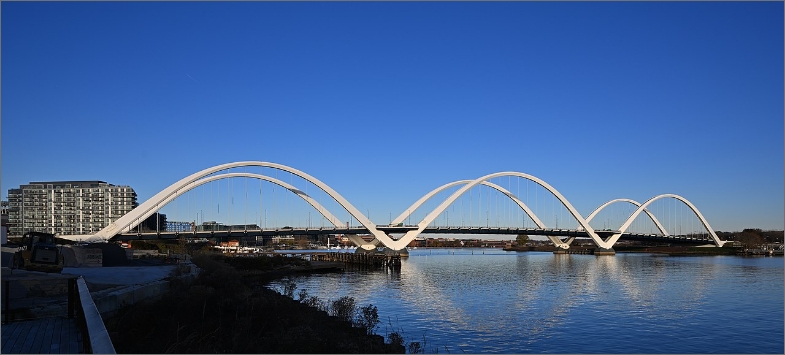
As of 2024, the North Carolina Department of Transportation (NCDOT) managed 13,848 bridges across the state, with 46% rated in good condition, 46% fair, and 8% poor. While still higher than the national average, the number of bridges with “poor” ratings is down significantly from 22.8% in 2014, which is attributed to increased investment in bridge replacement, preservation, and maintenance. In total, funding has increased from $150 million in FY2015 to $482 million in FY2025. However, aging infrastructure remains a concern, with over 4,800 bridges currently over 50 years old, and expected to exceed 6,300 by 2035. To assess bridge conditions, prioritize repairs, and optimize constrained funding, NCDOT uses advanced, AI-powered tools like ArTEMIS. Despite the use of these new technologies and improved operational strengths, future bridge funding needs across North Carolina are projected to rise sharply, reaching $961 million by FY2027 with a $479 million shortfall, and further budget shortfalls projected to increase in the following years.
Dams
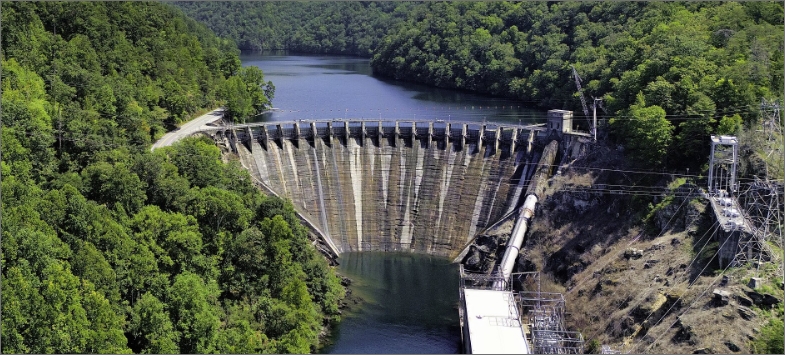
There are 7,448 dams in North Carolina, of which 2,350 are state-regulated or jurisdictional. These structures provide immense benefits to the state by providing water supply, flood control, irrigation, and recreation. Over 83% of the state’s 2,350 jurisdictional, high hazard dams have been inspected annually since 2023. Of the high hazard dams, 45% have up-to-date Emergency Action Plans (EAPs), which is lower than the national average of 82%. Funding for state dam safety inspections has increased over the past decade, and additional funds are anticipated to address damage to dams from recently-named tropical storm events. While Tropical Storm Helene devastated western North Carolina in 2024 and caused catastrophic infrastructure damage, no major dam breaches were reported. There is a funding gap of approximately $5.97 billion for dam maintenance and repair for dams that are not rated satisfactory, nearly half of which is needed to repair high hazard dams ($2.83 billion).

Drinking Water
Maintaining, upgrading, and funding clean drinking water infrastructure is critical for keeping up with the continuing population growth in North Carolina. North Carolina’s frequent natural disasters — including hurricanes, ice storms, and droughts — underscore the need for resilient water systems made clear by the destruction caused by Tropical Storm Helene in 2024. There is growing concern for synthetic chemical containments, or “forever chemicals” such as PFAS and PFOAs moving through the water cycle and potentially harming people, including raising the risk of cancer. Water treatment for these containments can be challenging from both financial and operational perspectives. North Carolina has benefitted from licensed, trained operators who have chosen to make water treatment and utility work a lifelong career; however, many of these skilled professionals are retiring, and the industry must attract, train, and retain more utility operators.
Roads
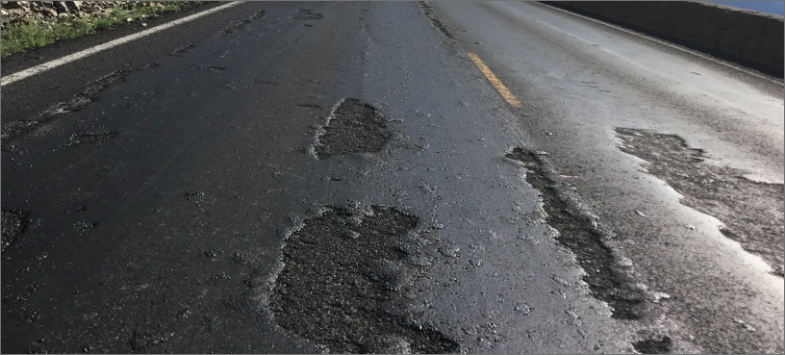
With over 80,000 lane miles statewide under North Carolina Department of Transportation (NCDOT) ownership, North Carolina’s roads are critical to mobility and commerce. However, aging assets, increasing vehicle miles traveled (VMT), and inflationary pressures are straining the system. North Carolina’s road infrastructure faces mounting challenges in maintenance, funding, and modernization. Pavement conditions show that nearly two-thirds of roads are in only fair condition, requiring resurfacing or replacement within the next decade. Meanwhile, traditional funding sources such as the motor fuels tax are becoming less robust due to fuel efficiency and electric vehicle adoption. To raise the grade, decision-makers must prioritize sustainable funding reforms, invest in resilience, and expand safety initiatives.

Stormwater
North Carolina manages stormwater through 101 utilities serving about 5.1 million residents, which is roughly half the state. From the mountains through the Piedmont to the coast, stormwater infrastructure in North Carolina faces many challenges; specifically, development and funding are challenging for many municipalities. At least $2.76 billion is needed through 2034 — with more than 80% of utilities reporting unmet capital needs. Fee adoption can be politically difficult, and grants, while helpful, are highly competitive. The state has also implemented an outreach and mapping program to aid citizens with flood risk awareness. This is an important tool, as studies have shown that 22% of structures that have flooded in North Carolina since 1996 are prone to repeated flooding. To sustain and build upon these types of gains, stormwater infrastructure will require long-term, predictable investment to expand capacity, protect public safety, and build long-term resilience.
Wastewater
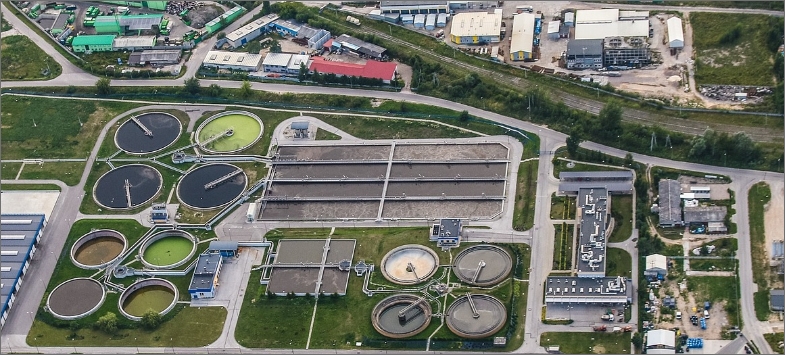
North Carolina is now the ninth most populous and the eighth fastest-growing state, expanding at 1.5% annually. To accommodate community growth, the two largest counties (Wake and Mecklenburg) are planning to expand or build new wastewater treatment plants to keep pace with further development. As population shifts from small towns to larger cities, declining customer bases place additional financial strain on small utilities, which already struggle to maintain sewer and wastewater systems. Many must charge higher sewer rates to offset the loss of customers. The recent 2022 EPA Clean Watersheds Needs Survey identified approximately $12.6 billion in projected sewer and wastewater treatment needs in North Carolina. Though there has been an influx of funding for infrastructure projects, there is still a shortfall to complete all needed projects and a growing emphasis in the state to raise utility user rates to meet operation and maintenance needs.

$20 billion is needed to maintain and improve North Carolina's drinking water infrastructure over the next 20 years.
State Fact Sheet
Download Fact Sheet
19,343
Bridges

7%
of Bridges are Deficient

1652
High Hazard Dams

$49.2B
in Drinking Water Needs

79 Miles
of Levees
Protecting 7,700 people

39%
of Roads in poor or fair condition

$ 690.43
Motorist pays annually
due to insufficient infrastructure

53.2M
Passenger Trips on Public Transit

$70.6B
Wastewater needs

$135.8B
Total storm damage
(1980-2024)

IIJA Grants
IIJA Funding Announced
Number of IIJA Projects
Alligator River Bridge: This $110 million award will replace the Alligator River Bridge on U.S. Highway 64 with a modern high-rise fixed span bridge, resulting in improved reliability and safety along the primary east-west route between I-95 and the Outer Banks.
I-85 Futures: This $100 million award will widen a segment of I-85 from six lanes to eight lanes and replace multiple interchanges, overpasses, and railroad bridges, resulting in improved traffic flow, enhanced active transportation with nine miles of sidewalks and bike paths, expanded ITS capabilities through fiber optic installation, and added EV charging infrastructure.
Cape Fear Memorial Bridge: This $242 million award will replace the 54-year-old Cape Fear Memorial Bridge carrying US 17/US 76/US 421 across the Cape Fear River, resulting in improved safety and reliability along a critical route connecting New Hanover and Brunswick Counties—the fastest-growing counties in North Carolina.

Connect with Your Legislators
Let everyone know how important it is that we continue to invest in the future of America’s infrastructure.
Take Action Today